How to Read a Local News Headline Before Sharing It
Learn how to read a local news headline against the report, check who makes each claim and spot uncertainty before sharing a story.
The most common mistake with a confident local news headline is treating its strongest wording as settled fact. The cost is that a rumour, proposal or early account can spread through a neighbourhood as though the report had confirmed it. Before sharing, read the headline against the article and identify the decision or event at its centre.
A headline has little room for qualification. The report beneath it may distinguish a council proposal from an approved decision, an allegation from a finding, or a witness account from a recorded event. The useful question is not simply whether the headline sounds dramatic, but what stage of the local process it describes.
Think of a headline as a sign on a folder: it helps you find the subject, but you need to open the folder to see what it contains. The article’s timeline, named decision-makers and procedural details can reveal whether the news is a completed action or a step still under consideration.
Read the headline as a point in a local process
Put the headline into plain language. Is it saying that an event happened, that an organisation is considering an action, or that someone predicts an outcome? These statements can concern the same issue while describing very different stages.
Pay attention to verbs and qualifiers. “Council approves”, “council considers” and “council may approve” do not mean the same thing. A school that “could close” has not necessarily been told to shut, and a planning application “submitted” is not an application “approved”.
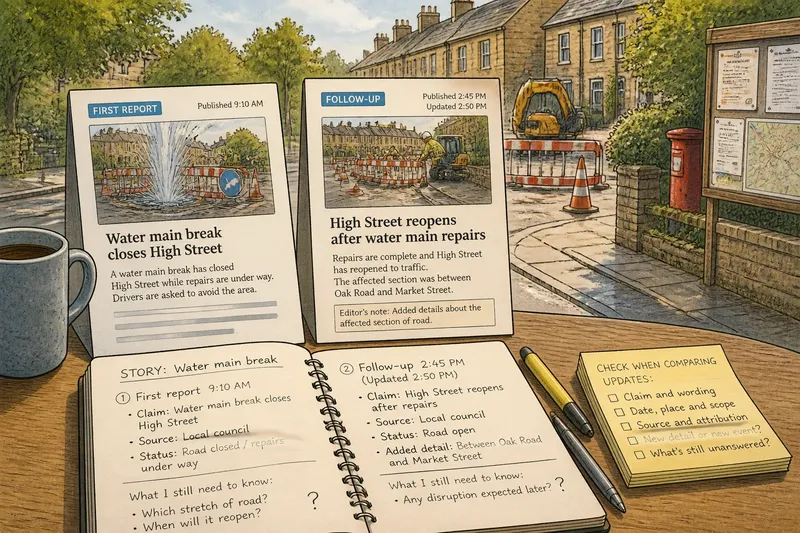
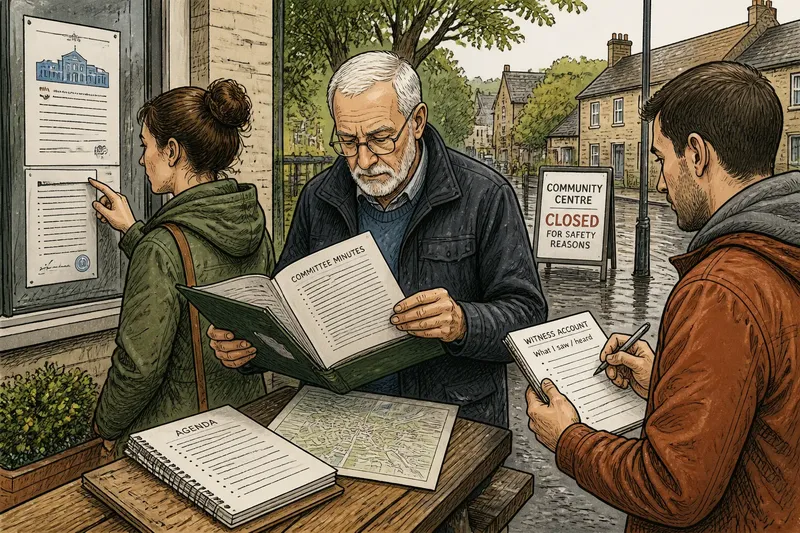
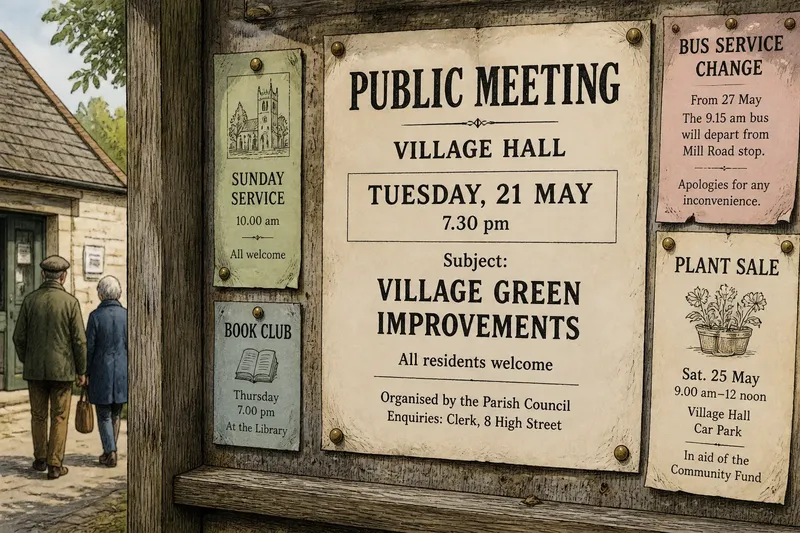
For local stories, identify the process behind the headline: a council meeting, planning application, consultation, service review, lease discussion or formal decision. Then look for the point the process has reached. An agenda can show that a topic is due for discussion; the minutes or a later report may record what happened after that.
Build a simple timeline from the report
Find the sentences that describe what has already happened and what comes next. A meeting may have taken place, a motion may have been proposed, or a department may have opened a review. A vote, public consultation or final decision may still be pending.
Keep those stages separate when you explain the story. “The council discussed the proposal” does not establish that it approved it. “Officials expect to decide” describes an anticipated next step, not a completed decision.
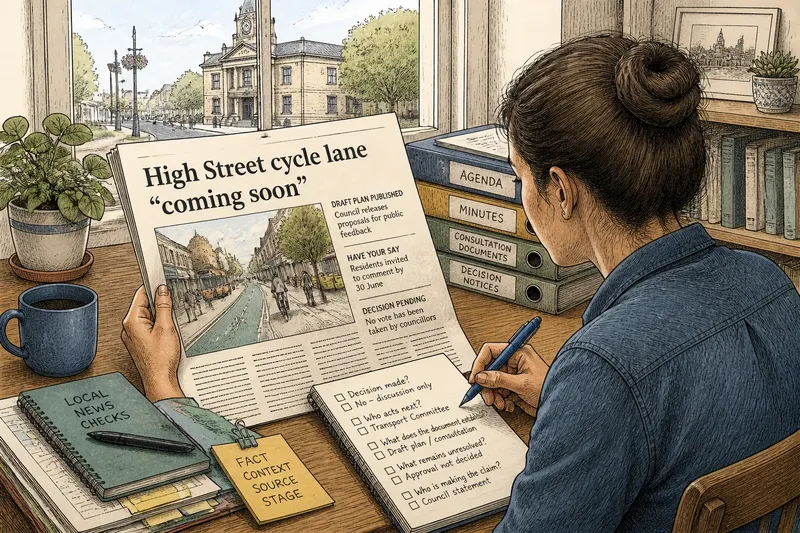
Say a neighbourhood paper reports that a new cycle lane is “coming to” a high street. The article says the council has published a draft plan, residents can comment, and councillors have not voted on it. A careful reader can state the result precisely: a draft cycle-lane plan is open for comments, while its approval remains undecided.
Check the record that marks the current stage
When an article points to a public document, identify what kind of record it is before drawing a conclusion. An application records a request; a consultation document sets out a proposal; a decision notice records an outcome. A meeting agenda lists business for discussion, while minutes can show what was agreed or deferred.
Look for the relevant date and the body responsible for the next action. A planning committee, council cabinet, school governing body or transport authority may each have a different role. If the article does not explain who decides, avoid turning a general announcement into a claim about an official outcome.
Records can also have limits. A document may establish that a proposal exists without resolving its effects, timetable or final status. Keep the scope of the record attached to your summary: what it records, who issued it and what decision it does not yet settle.
Keep a claim attached to the person or organisation making it
Local reports often bring together statements from officials, campaigners, residents, businesses and people directly affected. Notice who is speaking, whether the words are quoted or paraphrased, and whether the report presents them as a claim, an observation or an established event.
“The road is unsafe” reads differently from “residents say the road is unsafe”. The second tells you whose view is being reported; it does not make their concern unimportant. When you repeat the point, keep the attribution with it rather than turning one group’s description into an unqualified fact.
Also distinguish a response from a decision. An organisation’s statement may explain its position, but it does not necessarily settle a disputed issue or show that a proposed change will happen. The article should make the status of the statement clear enough for you to retell it accurately.
What should you check before sharing a local headline?
Has a decision actually been made?
Find the sentence that records a vote, formal notice or other completed action. If the article only describes discussion or a proposal, share it as a proposal rather than as an approved change.
Which local body or person acts next?
Look for the named committee, authority, owner or other decision-maker and the next stage described. If the article does not name one, avoid claiming that a particular body has made or will make the decision.
What does the cited document establish?
Check whether it is an agenda, application, consultation paper, minutes or decision notice. If it records a request rather than an outcome, describe the request and leave the outcome open.
What remains unresolved?
Look for a pending vote, unanswered question, missing confirmation or stated limit. If the report says an issue remains unsettled, preserve that qualification when discussing or sharing it.
Use a concrete check before passing the story on
These checks are most useful when they lead to a clear choice about what to say next. For each point, match an observable detail in the article to a more precise way of describing it.
- Check whether the report describes a completed vote or only a discussion; if a vote is recorded, say the body voted, but if not, describe the matter as under discussion.
- Check whether a planning item is an application or a decision notice; if it is an application, call it a request for permission, but if a decision notice records approval or refusal, state that outcome.
- Check whether a consultation is open or has closed; if it is open, say people can still respond, but if it has closed, describe it as completed and do not imply that comments are still being collected.
- Check whether a quotation is attributed to a named resident, group or official; if the speaker is identified, retain that attribution, but if not, say the report does not identify the source.
- Check whether the article gives a confirmed date or only an expected timetable; if a date is confirmed, repeat it as stated, but if it is described as expected, keep that uncertainty in your wording.
- Check whether the report records an outcome or says a response is still awaited; if the outcome is recorded, describe it, but if a response is pending, say the issue remains unresolved.
For instance, imagine a residents’ group post says a library “will close”, while the linked report says the council has begun a service review and has not made a closure decision. First, check the report’s description of the review; second, look for a recorded decision notice or vote; third, note that the article says no decision has been made. The accurate version to share is that the library is under review, not that closure is settled. That wording gives neighbours the current status without making the review sound like an outcome.
Share the decision stage, not just the headline
When you pass on a local report, name the event or process it documents: a proposal was published, a meeting took place, a consultation closed, or a decision was recorded. Attach disputed claims to their speakers and keep pending matters open in your wording. If the headline sounds firmer than the article, use the article’s more precise account.
That small adjustment is especially helpful in residents’ groups, where a short message can quickly become the version neighbours remember. Before repeating a local news headline, check what stage the story has reached and share that status plainly.